
What is a vacuum chamber? What should I pay attention to when customizing a vacuum chamber?
Contents
- 1. What is a vacuum chamber??
- 2. Operating principle of vacuum chamber
- 3. Application of vacuum chamber
- 4. What are the types of vacuum chambers?
- 5.How to choose a vacuum chamber?
- 5.1 Vacuum degree
- 5.2 Shape and size
- 5.3 Cavity materials
- 5.4 Sealing
- 5.5 Ease of installation
- 5.6 Cost and Budget Considerations
- 6. Customized vacuum chamber
- 7. What are the customization advantages of Anlai Technology?
Vacuum chamberIt is a very important equipment for the semiconductor manufacturing industry. Many processes must be carried out in a vacuum chamber to ensure product quality. This article explains the applications, types and considerations of vacuum chambers when customizing them.
What is a vacuum chamber?
A vacuum chamber is a sealed container designed to maintain a vacuum environment (low pressure state). In the fields of industry, laboratories, and semiconductor manufacturing, the main function of a vacuum chamber is to provide a space to remove air or other gases and to carry out various processes or experiments related to a vacuum environment in this space. The shapes of vacuum chambers include spherical, barrel, square door, or customized vacuum chambers provided by the industry.
according toTaiwan Physical SocietyTo build a vacuum system, the following four elements are required:
- Vacuum chamber:Provides a vacuum environment.
- Vacuum pump:The air in the cavity is continuously extracted to make the cavity reach a near vacuum state.
- Vacuum gauge:A measuring tool for measuring the air pressure inside a cavity.
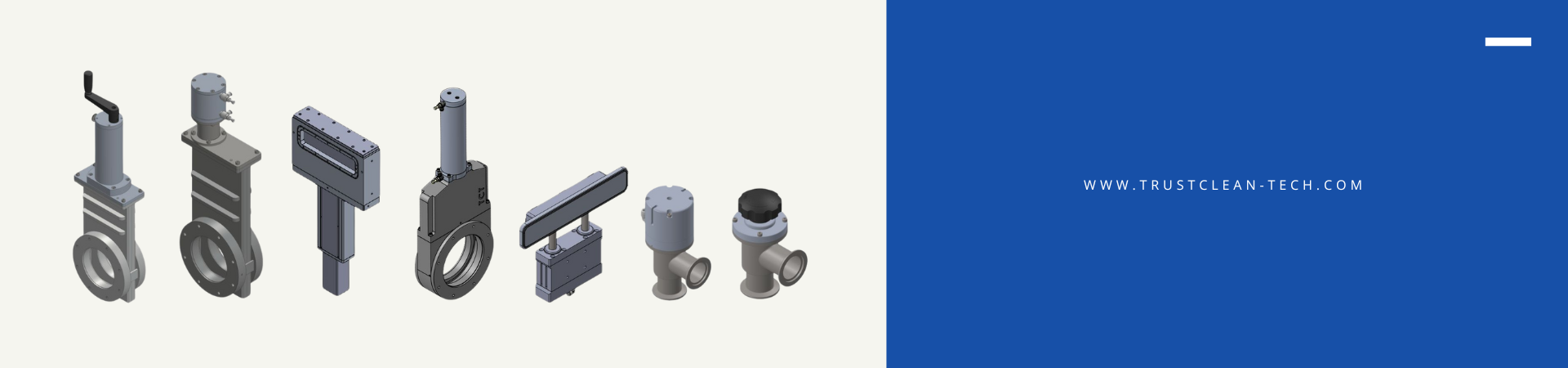
- Vacuum valve:A device used to control the flow of gas in and out.
What is a vacuum chamber? What should I pay attention to when customizing a vacuum chamber?
The general operating principle of the vacuum chamber is to connect the pipeline to the vacuum valve and the vacuum pump, and then start the pump to extract the air in the chamber. Once the vacuum state is reached, the chamber is sealed through the vacuum valve device to prevent external air from entering, and the vacuum state inside the chamber is monitored through a vacuum gauge.
Application of vacuum chamber
Vacuum chambers have a wide range of applications and are particularly important in industries that require high cleanliness and precision control.
- Semiconductor:The coating, plasma etching and other processes in the semiconductor industry need to be carried out in a vacuum chamber to avoid contamination by other impurities in the air. Simply put, the vacuum chamber can ensure the quality of the wafer.
- Materials field:Vacuum chambers can be used for material surface treatment to change the material's properties and structure.
- Coating and coating:In the coating process of optical lenses, display panels, solar panels, etc., the vacuum chamber can effectively prevent contamination by air impurities during the coating process.
- Space and aviation industry:In the manufacturing and testing of aviation equipment, vacuum chambers can be used to simulate high altitude, space vacuum or near-vacuum environments to test the pressure resistance and reliability of equipment.
What are the types of vacuum chambers?
Even if the air is pumped out by a pump, the vacuum chamber cannot actually reach a complete vacuum, but rather a state close to vacuum. Therefore, there is a distinction between a high vacuum chamber and an ultra-high vacuum chamber. The characteristics and applications of the two are also different. The following table introduces the differences between high vacuum chamber and ultra-high vacuum chamber:
| High vacuum chamber | Ultra-high vacuum chamber | |
| Vacuum degree difference | 10-4 mbar ~ x 10-8 mbar | 10-9 mbar ~ x10-12 mbar |
Feature |
|
|
| Application | Vacuum coating, semiconductor processing, electron beam welding | Surface science, optical electronics |
How to choose a vacuum chamber?
Vacuum degree
Different processes have certain requirements for vacuum degree. For semiconductor processes and precision science research, ultra-high vacuum chambers are the first choice.
Shape
The size and shape of the vacuum chamber must strictly meet actual needs, and chambers of different shapes can be customized if necessary.
Cavity material
The cavity material affects the stability and durability of the product. The materials include stainless steel, aluminum alloy, high-density alloy, etc.
Sealing
The sealing of the vacuum chamber is the key, which directly affects whether the chamber can reach the required vacuum degree.
Ease of installation
The vacuum chamber needs to be connected to multiple pipes and accessories, so it is necessary to consider whether the interface design of the chamber is easy for subsequent adjustments or maintenance operations.
Cost and budget considerations
Budget is also a practical consideration when choosing a vacuum chamber. High vacuum and ultra-high vacuum vacuum chambers are usually expensive, and a balance needs to be struck between budget constraints and needs.
In addition, it is also very important to choose a better equipment manufacturer, including how the manufacturer proves the product quality (such as residual gas monitoring, nitrogen leak detection, etc.), whether the manufacturer has rich experience in manufacturing chambers, welding and surface treatment technology, etc.
Customized vacuum chamber
Vacuum chambers are generally customized according to the customer's process and the size of the environment in which they are used. Whether it is the appearance, size or additional accessories, they must all meet actual needs. Generally speaking, vacuum chamber equipment manufacturers will participate in the design of the vacuum chamber, but the processing, welding, surface treatment and other process technologies of the chamber are handed over to professional manufacturers to ensure the quality of the vacuum chamber.
The following introductionCustomized vacuum chamberSpecifications, materials, surface treatment, welding and other process technologies:
- size:The size of the vacuum chamber will be customized according to customer needs.
- shape:The main shape is a quadrilateral, but it can have different shapes according to needs, such as spherical, barrel-shaped, polygonal, etc.
- Material:The vacuum chamber is mostly made of stainless steel (304, 316 series) and aluminum alloy.
- Surface treatment:Surface treatment of the vacuum chamber is an important key. Surface treatment can make the surface cleanliness of the chamber reach a certain level, make the surface of the chamber smooth or retain a protective film, so that the chamber can reduce the adhesion of foreign matter inside the chamber during the manufacturing process, thereby achieving high cleanliness, high corrosion resistance, etc.
- welding:Professional welding technology can make the vacuum chamber structure more solid and durable, and can cope with the pressure in high vacuum and ultra-high vacuum environments and the semiconductor manufacturing process.
- Vacuum chamber baking:Through high-temperature baking, the remaining gas and impurities in the cavity can be removed, ensuring the reliability and complete cleanliness of the cavity and making it available to semiconductor manufacturers at any time.
What are the customization advantages of Anlai Technology?
Anlai Technology has extensive experience in manufacturing vacuum chambers and focuses on serving a variety of technology industries. Anlai Technology's vacuum chamber is made of stainless steel 304 series and 316L, which have the advantages of high corrosion resistance and high durability. It is welded with vacuum pipe fittings, and the surface is electrolytically polished and highly cleaned to meet high vacuum and ultra-high vacuum standards. Most of the components we manufacture use standard specifications as the base, and then customize the length, angle or connection method according to customer requirements and weld to meet customer needs. If you have any customized vacuum chamber requirements, please Contact Us!!
Further reading:
What are vacuum fittings? Professional customized vacuum piping service
What types of vacuum valves are there? Four key points for valve selection
What is an angle valve? What are the application areas of angle valves?